Year 11 Chemistry Module 3 ⏱ ~35 min Lesson 4 of 12

Combustion Reactions

Every bushfire, every car engine, every gas stove — combustion reactions power modern life and reshape landscapes. But the difference between complete and incomplete combustion determines whether the products are harmless or deadly. Understanding oxygen availability is the difference between clean burning and carbon monoxide poisoning.
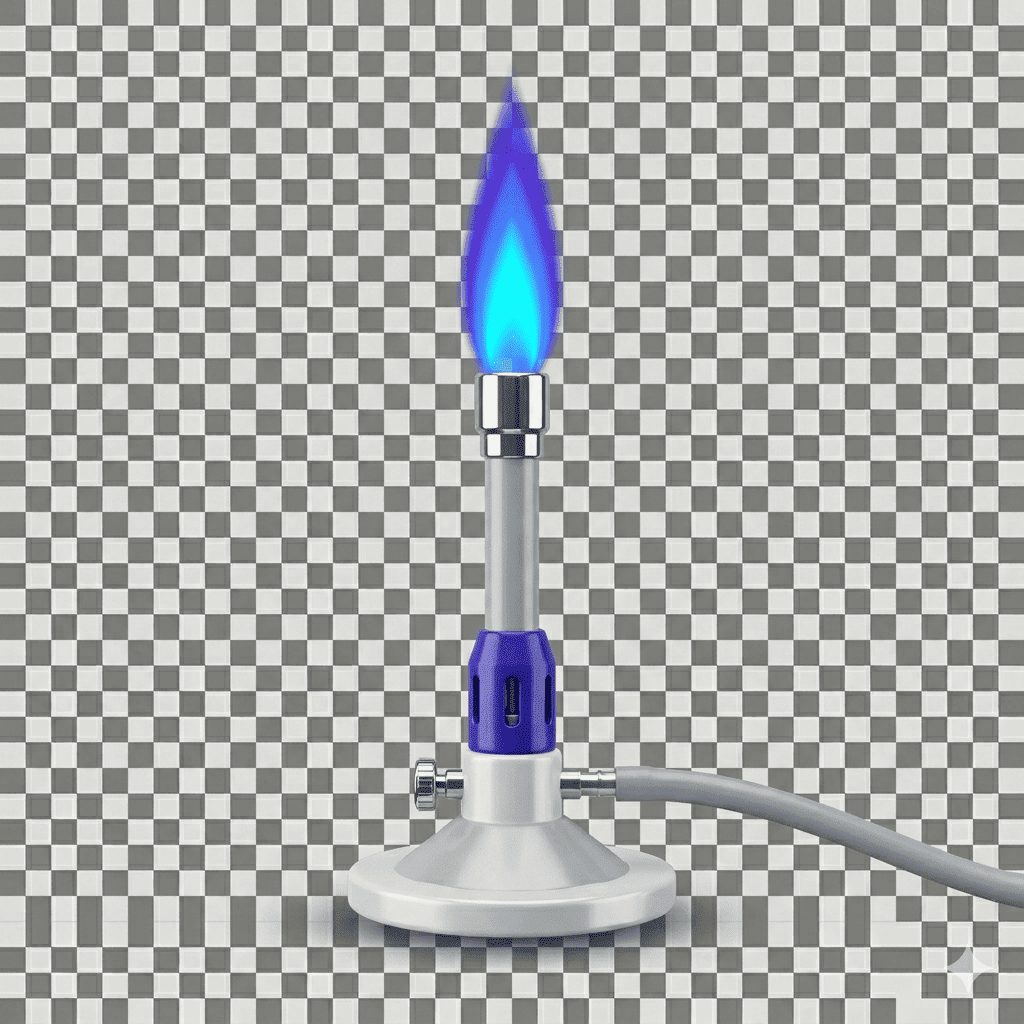
Bunsen burner
Printable worksheet

Download this lesson's worksheet

Use the PDF for classwork, homework or revision. It includes key ideas, activities, questions, an extend task and success-criteria proof.

Think First

A bushfire burns through dry eucalyptus forest. At the fire front, intense heat and strong airflow provide abundant oxygen. Further back, where smouldering logs burn slowly under ash, there is much less oxygen available.

Both situations involve wood burning — the same fuel, the same type of reaction. But a firefighter would be far more rapidly incapacitated near the smouldering zone than the open flame front. What do you think is different about the products formed in each situation? Write your prediction before reading on.

Type your initial response below — you will revisit this at the end of the lesson.

Write your initial response in your book. You will revisit it at the end.

Write your initial thinking in your book
Saved
📐

Key Patterns — This Lesson

$\text{C}_x\text{H}_y + \text{O}_2 \rightarrow \text{CO}_2(g) + \text{H}_2\text{O}(g)$  (complete)
Sufficient $\text{O}_2$ $\rightarrow$ only $\text{CO}_2$ and $\text{H}_2\text{O}$ produced
$\text{C}_x\text{H}_y + \text{O}_2\text{(limited)} \rightarrow \text{CO}(g) \text{ and/or } \text{C}(s) + \text{H}_2\text{O}(g)$  (incomplete)
Limited $\text{O}_2$ $\rightarrow$ $\text{CO}$ (toxic) and/or soot $\text{C}$ produced instead of $\text{CO}_2$
Balancing hydrocarbon combustion: balance C first → then H → then O last
📖 Know

Key Facts

  • Products of complete combustion (CO₂ and H₂O)
  • Products of incomplete combustion (CO, C soot)
  • Why CO is toxic at low concentrations
💡 Understand

Concepts

  • Why oxygen availability determines which products form
  • How to systematically balance hydrocarbon combustion equations
  • The chemistry of bushfire zones
✅ Can Do

Skills

  • Balance complete combustion equations for hydrocarbons
  • Write incomplete combustion equations producing CO
  • Explain the hazard difference between fire front and smouldering zones
Key Terms — scan these before reading
sufficient oxygenPresent, CO forms instead of CO₂.
insufficient oxygenPresent, CO forms instead of CO₂.
Synthesis reactionA reaction where two or more reactants combine to form a single product.
Decomposition reactionA reaction where a single compound breaks down into simpler substances.
Precipitation reactionA reaction in which an insoluble solid forms when two solutions are mixed.
Combustion reactionA rapid reaction with oxygen producing heat, light and oxides.
Test tube

Incomplete Combustion

Incomplete combustion occurs when insufficient oxygen is available to fully oxidise all carbon and hydrogen. The products shift from harmless CO₂ to substances that are toxic, polluting, or both.

Complete combustion

Oxygen Supply: Sufficient
Products: CO₂(g), H₂O(g)
Flame Colour: Blue / clear

Incomplete combustion

Oxygen Supply: Limited
Products: CO(g), C(s) soot, H₂O(g)
Flame Colour: Yellow / orange / smoky
CO toxicity: Carbon monoxide binds to haemoglobin with approximately 200 times the affinity of oxygen. Even small concentrations of CO occupy haemoglobin binding sites, preventing O₂ transport to cells — causing tissue hypoxia, confusion, and death. This is why gas heaters and wood fires must be adequately ventilated.
Common error: Students write CO₂ as the defining product of incomplete combustion. While some CO₂ may still form, the defining products are CO and/or C soot — these distinguish incomplete from complete combustion. Focus your answer on CO and soot.
Candle vs Bunsen burner: The yellow-orange glow of a candle flame is caused by glowing carbon soot particles — incomplete combustion. The blue inner cone of a Bunsen burner is complete combustion. The Bunsen draws in air through its base, providing more oxygen.
COMPLETE COMBUSTION excess O₂ — blue flame CₓHᵧ + O₂ CO₂ H₂O Products: CO₂ + H₂O only ✓ Clean combustion — no toxic gas e.g. CH₄ + 2O₂ → CO₂ + 2H₂O INCOMPLETE COMBUSTION limited O₂ — yellow/smoky flame CₓHᵧ + O₂↓ CO C H₂O Products: CO + C(soot) + H₂O ✗ CO toxic · soot = air pollutant e.g. 2CH₄ + 3O₂ → 2CO + 4H₂O
02

Metal Combustion

Metals burn too — forming metal oxides in a synthesis-type combustion reaction. The metal's reactivity determines how vigorously it burns.

Balanced Equation
2Mg(s) + O₂(g) → 2MgO(s)
4Fe(s) + 3O₂(g) → 2Fe₂O₃(s)
2Cu(s) + O₂(g) → 2CuO(s)
Observation
Brilliant white flame
Glowing sparks in pure O₂
Slow — black coating forms
Metal oxide products are always solid (s): Include state symbol (s) for the metal oxide. Verify the formula using ion charges — Mg²⁺ + O²⁻ → MgO (1:1 ratio), Fe³⁺ + O²⁻ → Fe₂O₃ (2:3 ratio).
Common error — formula confusion: Students write MgO₂ as the product of magnesium combustion, thinking the subscript from O₂ carries over. It does not — the product formula is determined by ion charges (Mg²⁺ and O²⁻ → MgO), not by the oxygen molecule used as reactant.
03

Bushfire Chemistry — Complete vs Incomplete Combustion in the Landscape

A bushfire is not one uniform reaction — it is a shifting mosaic of complete and incomplete combustion zones, each producing different products and presenting different hazards.

Zone Oxygen availability Combustion type Main gases produced Primary hazard
Fire front (active flaming) High — strong airflow Predominantly complete CO₂, H₂O Heat, radiant energy
Smouldering zone (behind fire front) Low — oxygen restricted under ash Predominantly incomplete CO, fine C particles CO poisoning, air quality
🌿 Real-World Anchor — Bushfire Chemistry: Smouldering can persist for days or weeks after a fire front passes. CO from smouldering zones is the primary cause of fire-related deaths in enclosed spaces and can accumulate in valleys under temperature inversions. Prescribed burns by Aboriginal and Torres Strait Islander land managers — and modern fire agencies — are timed to promote complete combustion (adequate wind, low humidity) to minimise smouldering and CO production.
Precision required: CO₂ is not harmless in high concentrations — at very high levels it causes suffocation by displacing oxygen. However, CO is acutely toxic at far lower concentrations. In HSC answers, be precise: CO is toxic at low concentrations because of haemoglobin affinity (not just displacement).
Choose fuel · adjust O₂ supply · watch products change from CO₂/H₂O (complete) to CO + soot (incomplete) Interactive

🧮 Worked Examples

Worked Example 1 — Balancing Hydrocarbon Combustion

Stepwise
Write the balanced equation for the complete combustion of butane (C₄H₁₀), including state symbols. Show all balancing steps.
  1. 1
    Write unbalanced equation
    C₄H₁₀(g) + O₂(g) → CO₂(g) + H₂O(g)
  2. 2
    Balance C first — 4 C atoms in butane
    C₄H₁₀(g) + O₂(g) → 4CO₂(g) + H₂O(g)
  3. 3
    Balance H — 10 H atoms in butane → 5 H₂O
    C₄H₁₀(g) + O₂(g) → 4CO₂(g) + 5H₂O(g)
  4. 4
    Balance O last — right side has 4×2 + 5×1 = 13 O atoms → need 13/2 O₂
    C₄H₁₀(g) + 13/2 O₂(g) → 4CO₂(g) + 5H₂O(g)
  5. 5
    Clear fraction — multiply all coefficients by 2
    2C₄H₁₀(g) + 13O₂(g) → 8CO₂(g) + 10H₂O(g)
    Verify: Left — 8C, 20H, 26O. Right — 8C, 20H, 16+10=26O. ✓
✓ Answer 2C₄H₁₀(g) + 13O₂(g) → 8CO₂(g) + 10H₂O(g)

Worked Example 2 — Complete vs Incomplete Combustion of Methane

Stepwise
A gas heater burns natural gas (methane, CH₄) in a poorly ventilated room. (a) Write the equation for complete combustion. (b) Write an equation showing incomplete combustion producing CO. (c) Explain why CO is dangerous at much lower concentrations than CO₂.
  1. 1
    (a) Complete combustion — sufficient O₂
    CH₄(g) + 2O₂(g) → CO₂(g) + 2H₂O(g)
    Check: Left — 1C, 4H, 4O. Right — 1C, 4H, 2+2=4O. ✓
  2. 2
    (b) Incomplete combustion — limited O₂, producing CO
    2CH₄(g) + 3O₂(g) → 2CO(g) + 4H₂O(g)
    Check: Left — 2C, 8H, 6O. Right — 2C, 8H, 2+4=6O. ✓
  3. 3
    (c) Why CO is more dangerous than CO₂ at the same concentration
    CO binds to haemoglobin with ~200× the affinity of O₂. At low concentrations, CO occupies haemoglobin binding sites and prevents oxygen transport to tissues. CO₂ causes harm primarily by displacing O₂ from air at very high concentrations — it requires far higher concentrations to cause physiological damage.
✓ Answers (a) CH₄(g) + 2O₂(g) → CO₂(g) + 2H₂O(g)  |  (b) 2CH₄(g) + 3O₂(g) → 2CO(g) + 4H₂O(g)  |  (c) CO has ~200× haemoglobin affinity vs O₂

📝 How are you completing this lesson?

The Fire Triangle 🔥 Heat ⛽ Fuel 🌬️ O₂ Complete Combustion Fuel + excess O₂ → CO₂ + H₂O Blue flame, efficient Incomplete Combustion Fuel + limited O₂ → CO + C + H₂O Yellow sooty flame

🧪 Activities

🧮 Activity 1 — Calculate + Interpret

Balancing Combustion Equations

Balance each combustion equation and then answer the interpretation question.

  1. 1 Balance the complete combustion of ethane (C₂H₆):   C₂H₆(g) + O₂(g) → CO₂(g) + H₂O(g)   [unbalanced]

    Balance C: 2 C → 2CO₂.   Balance H: 6 H → 3H₂O.   Balance O: right has 4+3=7 O → need 7/2 O₂. Multiply by 2:
    2C₂H₆(g) + 7O₂(g) → 4CO₂(g) + 6H₂O(g)
    Check: Left — 4C, 12H, 14O. Right — 4C, 12H, 8+6=14O. ✓
  2. 2 Balance the complete combustion of propane (C₃H₈):   C₃H₈(g) + O₂(g) → CO₂(g) + H₂O(g)   [unbalanced]

    Balance C: 3 → 3CO₂.   Balance H: 8 → 4H₂O.   Balance O: right has 6+4=10 O → need 5 O₂.
    C₃H₈(g) + 5O₂(g) → 3CO₂(g) + 4H₂O(g)
    Check: Left — 3C, 8H, 10O. Right — 3C, 8H, 6+4=10O. ✓
  3. 3 Write and balance the incomplete combustion of methane (CH₄) that produces carbon soot (C) rather than CO:   CH₄(g) + O₂(g) → C(s) + H₂O(g)   [unbalanced]

    Balance C: 1 → 1C(s).   Balance H: 4 → 2H₂O.   Balance O: right has 2O → need 1 O₂.
    CH₄(g) + O₂(g) → C(s) + 2H₂O(g)
    Check: Left — 1C, 4H, 2O. Right — 1C, 4H, 2O. ✓
    Note: This represents extreme oxygen limitation — only enough oxygen to oxidise hydrogen, leaving carbon as soot.

Show your working below before revealing answers:

Complete in your workbook.

✏️ Complete in your workbook
🔬 Activity 2 — Data Analysis: Bushfire Zones

Analysing Combustion Products in Bushfire Zones

Study the data table and answer the questions based on combustion chemistry principles.

Zone Approx. temperature (°C) Oxygen availability Measured CO (ppm) Measured CO₂ (%)
Active flame front 800–1100 High 200–500 8–12
Smouldering zone 300–600 Low 5,000–50,000 2–5
Safe ambient air 20–25 Normal (21%) <1 0.04
Note: Occupational health guidelines set the safe short-term CO exposure limit at 50 ppm for 8-hour exposure, and 200 ppm for 15-minute exposure. CO concentrations above 1,000 ppm can cause unconsciousness within 1 hour.
Question A: Using data from the table, explain why the smouldering zone is more hazardous to firefighters than the active flame front in terms of gas toxicity. Reference specific CO concentrations.
Question B: The smouldering zone shows lower CO₂ concentration than the flame front, yet higher CO. Using combustion chemistry, explain why this is expected.
Question C: Traditional Aboriginal and Torres Strait Islander prescribed burns are conducted in windy, low-humidity conditions. Explain why these conditions favour complete rather than incomplete combustion, and why this matters for air quality.

Type your answers below:

Answer A, B, and C in your workbook.

✏️ Answer A, B, and C in your workbook
Revisit Your Thinking

Earlier you were asked: Why is the smouldering zone of a bushfire more dangerous than the active flame front, even though the flame front looks more intense?

The key insight: the smouldering zone produces CO through incomplete combustion — and CO, not CO₂, is the killer. At the fire front, abundant oxygen supports complete combustion → CO₂ and H₂O. Behind the front, restricted oxygen creates incomplete combustion → CO at concentrations 25–250× the safe short-term exposure limit. CO binds haemoglobin 200× more strongly than O₂, causing silent, rapid tissue hypoxia. The lesson for firefighter safety, ventilation design, and prescribed burn management all follow directly from this one chemical difference.

Now revisit your initial response. What did you get right? What has changed in your thinking?

Look back at your initial response in your book. Annotate it with what you now understand differently.

Annotate your initial response in your book
Saved
Interactive: Combustion Equation Balancer
Revisit Your Initial Thinking

Look back at what you wrote in the Think First section. What has changed? What did you get right? What surprised you?

Misconceptions to Fix

Wrong: Incomplete combustion is safer than complete combustion because it produces less CO₂.

Right: Incomplete combustion produces toxic carbon monoxide (CO) and particulate carbon (soot), which are deadly. Complete combustion produces CO₂ and H₂O, which are non-toxic. The goal is always complete combustion for safety and efficiency.

MC

Multiple Choice

5 random questions from a replayable lesson bank — feedback shown immediately

✍️ Short Answer

04

Extended Questions

UnderstandBand 3

8. Distinguish between complete and incomplete combustion of hydrocarbons. In your answer: (a) state the products of each type and the condition required, and (b) explain why the products of incomplete combustion are more hazardous than those of complete combustion. 4 MARKS

Type your answer below:

Answer in your workbook.

✏️ Answer in your workbook
ApplyBand 4

9. Pentane (C₅H₁₂) is a component of petrol. (a) Write the balanced equation for the complete combustion of pentane with state symbols. Show your balancing steps. (3 marks) (b) If insufficient oxygen is present, CO forms instead of CO₂. Write a balanced equation for this incomplete combustion of pentane producing only CO and H₂O. (1 mark) 4 MARKS

Type your answer below:

Answer in your workbook.

✏️ Answer in your workbook
EvaluateBand 5

10. Firefighters responding to a bushfire are warned that the smouldering zone behind the fire front is more dangerous than the active flame front in terms of toxic gas exposure. (a) Explain the difference in combustion chemistry between the two zones, including the products formed and why they differ. (3 marks) (b) Explain the specific mechanism by which carbon monoxide causes physiological harm, and why it is dangerous at concentrations far below those required for CO₂ to cause harm. (2 marks) 5 MARKS

Type your answer below:

Answer in your workbook.

✏️ Answer in your workbook

✅ Comprehensive Answers

🧮 Activity 1 — Balancing

1. Ethane: 2C₂H₆(g) + 7O₂(g) → 4CO₂(g) + 6H₂O(g). Check: 4C, 12H, 14O each side ✓

2. Propane: C₃H₈(g) + 5O₂(g) → 3CO₂(g) + 4H₂O(g). Check: 3C, 8H, 10O each side ✓

3. Soot product: CH₄(g) + O₂(g) → C(s) + 2H₂O(g). Check: 1C, 4H, 2O each side ✓

🔬 Activity 2 — Bushfire Zones

Question A: The smouldering zone shows CO concentrations of 5,000–50,000 ppm, compared to 200–500 ppm at the flame front. Safe short-term exposure limit is 200 ppm for 15 minutes — the smouldering zone exceeds this by 25–250×. At 1,000+ ppm CO, unconsciousness can occur within an hour, while the smouldering zone routinely reaches 50× this level. The flame front, while hot, produces far less CO due to complete combustion. The smouldering zone is therefore far more hazardous in terms of toxic gas exposure.

Question B: Lower CO₂ and higher CO in the smouldering zone is directly expected from combustion chemistry. Low oxygen availability prevents complete oxidation of carbon (C → CO₂) — instead, carbon is only partially oxidised to CO. Since CO consumes less oxygen per carbon atom than CO₂ does, less CO₂ is produced and more CO accumulates. The lower temperature also reduces the likelihood of any residual CO being oxidised to CO₂.

Question C: Wind provides a continuous supply of fresh oxygen-rich air to the combustion zone, supporting complete combustion. Low humidity means less moisture in the fuel and atmosphere, allowing higher temperatures that favour more complete oxidation. These conditions prevent the oxygen-limited smouldering that produces CO — promoting CO₂ and H₂O as products. This significantly reduces air quality impacts and CO accumulation, making prescribed burns safer for communities downwind and for the fire managers themselves.

❓ Multiple Choice

1. B — Complete combustion of any hydrocarbon always produces only CO₂ and H₂O.

2. C — 2C₂H₆ + 7O₂ → 4CO₂ + 6H₂O: 4C, 12H, 14O each side ✓. Option A uses fractional coefficient (technically correct but not preferred). Option B is unbalanced (6H on left vs 4H on right). Option D uses H₂O(l) — wrong state symbol.

3. B — CO binds haemoglobin with ~200× the affinity of O₂, blocking oxygen transport at very low concentrations. The other options are chemically incorrect.

4. D — In a closed garage, oxygen is consumed and becomes limited → incomplete combustion occurs → CO builds up to toxic levels. Option C shows complete combustion which wouldn't cause the specific CO hazard.

5. A — As O₂ decreases, combustion shifts from complete to increasingly incomplete. Yellow colour from glowing soot. Extinguishment when O₂ cannot sustain combustion.

6. C (Band 5) — The claim is partially correct. Complete combustion does avoid CO and soot, but CO₂ at >5% concentration causes suffocation, and heat from any combustion is hazardous. A nuanced evaluation earns full marks.

7. B (Band 6) — CH₄ + 2O₂ → CO₂ + 2H₂O requires exactly 2:1 O₂:CH₄. Exceeding this (operating with excess air) ensures all fuel is fully oxidised even if mixing is imperfect in the burner — critical for indoor safety.

📝 Short Answer Model Answers

Q8 (4 marks): (a) Complete combustion requires sufficient oxygen; products are CO₂(g) and H₂O(g) only [1]. Incomplete combustion occurs with limited oxygen; products are CO(g) and/or C(s) soot, along with H₂O(g) [1]. (b) CO is acutely toxic because it binds haemoglobin with ~200× the affinity of O₂, displacing oxygen from red blood cells and causing cellular hypoxia at very low concentrations [1]. C soot is a fine particulate that penetrates deep lung tissue, causing chronic respiratory disease and contributing to climate effects. CO₂ and H₂O (complete combustion products) are relatively harmless at normal concentrations [1].

Q9 (4 marks): (a) Balance C: 5 → 5CO₂ [½]. Balance H: 12 → 6H₂O [½]. Balance O: 5×2 + 6×1 = 16 → need 8O₂ [½]. Full equation: C₅H₁₂(g) + 8O₂(g) → 5CO₂(g) + 6H₂O(g) [1]. Check: Left — 5C, 12H, 16O. Right — 5C, 12H, 10+6=16O. ✓ [½]. (b) 2C₅H₁₂(g) + 11O₂(g) → 10CO(g) + 12H₂O(g) [1]. Check: Left — 10C, 24H, 22O. Right — 10C, 24H, 10+12=22O. ✓

Q10 (5 marks): (a) Flame front: high temperature with abundant oxygen supply (strong airflow) → predominantly complete combustion → products are CO₂ and H₂O (relatively harmless) [1]. Smouldering zone: lower temperature with restricted oxygen supply (covered by ash, no airflow) → predominantly incomplete combustion → products are CO and fine carbon soot particles [1]. They differ because oxygen availability determines the degree of carbon oxidation: sufficient O₂ oxidises all C to CO₂ (+4 oxidation state); limited O₂ only partially oxidises C to CO (+2 oxidation state) [1]. (b) CO binds to haemoglobin with approximately 200 times the affinity of O₂ — even small amounts of CO effectively block all O₂ binding sites on haemoglobin molecules, preventing O₂ transport to all cells in the body despite continued breathing [1]. CO₂ causes harm primarily by displacing O₂ from air at concentrations above ~5% (50,000 ppm); by comparison, CO causes physiological effects at 200 ppm and unconsciousness at 1,000 ppm — 50 times lower concentration [1].

Consolidation Game

Combustion Reactions

Mark lesson as complete

Tick when you've finished all activities and checked your answers.