Misconceptions to Fix

Wrong: All pollutants from industry are synthetic chemicals.

Right: Pollutants can be natural or synthetic; the issue is concentration and location, not just origin.

Year 12 Chemistry Module 8 · IQ1 ⏱ ~35 min Lesson 1 of 19

Acid-Base Titrations & Indicators

A patient says an antacid tablet “works really well”, but a chemist needs more than a feeling. If a tablet claims to neutralise excess stomach acid, how can we measure its real acid-neutralising capacity with enough precision to trust the label?

Conical flask
Printable worksheet

Download this lesson's worksheet

Use the PDF for classwork, homework or revision. It includes key ideas, activities, questions, an extend task and success-criteria proof.

Think First

Prediction Before Technique

A pharmacist sends a crushed antacid tablet to the lab and asks: “How much base is actually in this dose?” The tablet reacts with acid, indicators change colour, and a titre value appears on the burette.

  • How could a chemist use a known acid or base to work out the amount of unknown base in the tablet?
  • What might go wrong if the indicator changes colour too early or too late relative to the true reaction point?

📖 Know

  • What a titration measures and why it is used for unknown concentrations
  • The meaning of endpoint, equivalence point, concordant titres and back titration
  • The colour-change ranges of common acid-base indicators

💡 Understand

  • Why mole relationships sit underneath every titration calculation
  • Why endpoint and equivalence point should be close, but are not identical ideas
  • Why indicator choice depends on the pH jump near equivalence

✅ Can Do

  • Calculate an unknown concentration using n = cV and c = n/V
  • Interpret titration data, reject rough or non-concordant titres, and average reliable results
  • Explain how back titration can test the strength of an antacid tablet
Key Terms — scan these before reading
known concentrationadded carefully from a burette to a measured volume of an
remaining excess acidthen titrated with a standard sodium hydroxide solution
equivalence pointthe point where stoichiometrically equivalent amounts of acid and base have reacted
endpointwhen the indicator changes colour
How much baseactually in this dose?” The tablet reacts with acid, indicators change colour, and a titre value appears on the burette
measures and why itused for unknown concentrations

Choose how you work — type your answers below or write in your book.

1

What Titration Measures

Known concentration + measured volume = unknown concentration

A titration is not “adding liquid until the colour changes”. It is a quantitative method for counting moles through reaction stoichiometry.

In an acid-base titration, a solution of known concentration is added carefully from a burette to a measured volume of an unknown acid or base. When chemically equivalent amounts have reacted, the mole ratio in the balanced equation lets us determine the unknown quantity.

For a simple 1:1 neutralisation such as HCl(aq) + NaOH(aq) → NaCl(aq) + H2O(l), the moles of acid at equivalence equal the moles of base. If the reaction ratio is not 1:1, the balanced equation must be used explicitly.

Essential Relationships

n = cV Moles = concentration × volume in litres
c = n / V Concentration = moles divided by volume in litres
At equivalence: mole ratio follows the balanced equation For 1:1 reactions, moles acid reacted = moles base reacted
HSC languageWhen describing titration in extended response answers, say that the concentration is determined by reacting the analyte with a standard solution of known concentration and using the titre volume plus stoichiometry to calculate the unknown.
Titration Apparatus Known solution in burette Unknown aliquot in flask burette conical flask pipette white tile helps spot endpoint indicator added

Known titrant is delivered from the burette into a measured aliquot of analyte in the conical flask. The endpoint is judged in the flask, often over a white tile so the first permanent colour change is easier to see.
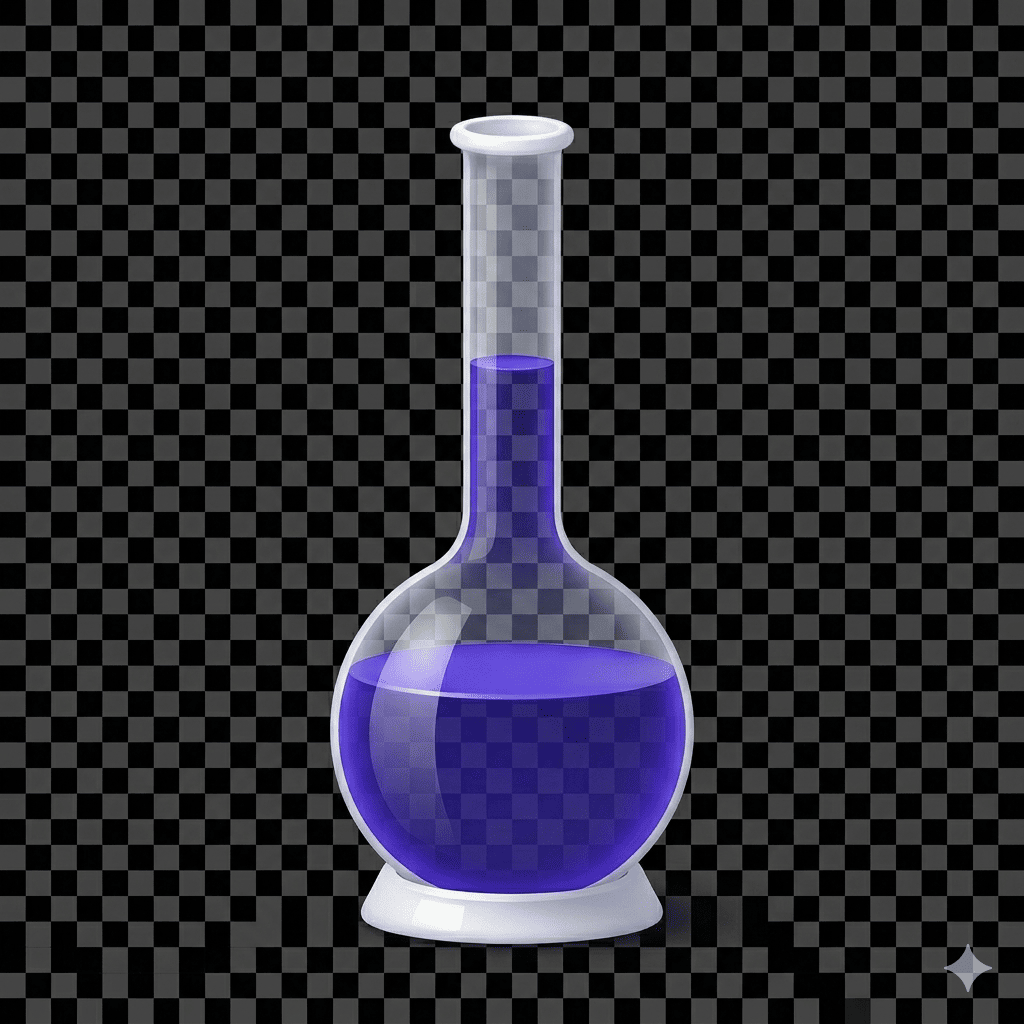
Volumetric flask

Volumetric flask — for preparing standard solutions

Conical flask

Conical flask — holds the analyte during titration

2

Method, Titre Values and Concordant Results

Accuracy depends on technique, not just maths

A good titration is a controlled sequence: prepare carefully, add quickly at first, slow down near the endpoint, then trust only concordant results.

  1. Rinse the burette with the titrant and the pipette with the analyte.
  2. Pipette a fixed aliquot of the unknown into a conical flask.
  3. Add a few drops of a suitable indicator.
  4. Run titrant from the burette while swirling the flask.
  5. Near the endpoint, add titrant dropwise until the colour change persists.
  6. Record the initial and final burette readings, then calculate the titre.

A first run is usually a rough titre. It helps locate the endpoint region. Reliable calculations should then use concordant titres, meaning titres that closely agree with each other, typically within 0.10 mL.

Common error“Average every titre you recorded.” Students think more numbers automatically improve accuracy. In reality, rough trials and obvious outliers should be excluded, because they distort the mean and reduce reliability.
Clinical anchorIn antacid testing, the difference between 23.45 mL and 24.80 mL is not trivial. A poor titre can make a tablet appear stronger or weaker than it really is, which matters if the dose is being quality-checked against a product claim.
3

Calculating Unknown Concentration

Use moles first, then convert to concentration

The safest titration workflow is: find moles of the standard solution, convert with stoichiometry, then divide by the aliquot volume of the unknown.

For HCl(aq) + NaOH(aq) → NaCl(aq) + H2O(l):

  1. Convert the titre to litres.
  2. Calculate moles of the known solution using n = cV.
  3. Use the balanced equation to find moles of the unknown.
  4. Use c = n/V for the unknown solution.

If the equation ratio is not 1:1, that conversion step becomes essential. For example, H2SO4(aq) + 2NaOH(aq) → Na2SO4(aq) + 2H2O(l) means 1 mol sulfuric acid reacts with 2 mol sodium hydroxide.

Must knowc1V1 = c2V2 works only when the reaction ratio is 1:1. In HSC Chemistry, the more reliable habit is to calculate moles explicitly and then apply the balanced equation.
4

Back Titration for Antacid Tablets

Add known excess, then titrate what is left over

Back titration is used when directly titrating the sample would be awkward, slow, or unreliable. Instead of measuring what reacted straight away, we measure what remained unreacted.

In an antacid analysis, a known excess of hydrochloric acid can be added to a crushed tablet. The base in the tablet neutralises some of that acid. The remaining excess acid is then titrated with a standard sodium hydroxide solution. This lets us calculate how much acid was left over, and therefore how much acid reacted with the antacid.

  1. Add a known amount of HCl(aq) to the tablet.
  2. Allow the tablet to react completely.
  3. Titrate the excess HCl(aq) with standard NaOH(aq).
  4. Subtract excess acid from initial acid to find acid consumed by the tablet.
  5. Use stoichiometry to determine moles of active base in the tablet.
Common error“The moles of acid added equal the moles in the antacid.” Not in back titration. Only the acid that actually reacted with the tablet counts. The excess acid measured in the second titration must be subtracted first.
5

Indicators, Endpoint and Equivalence Point

Choosing the right indicator is a chemistry decision

The equivalence point is a chemical fact. The endpoint is an experimental signal. Good titration design makes them occur almost together.

The equivalence point is the point where stoichiometrically equivalent amounts of acid and base have reacted. The endpoint is when the indicator changes colour. A suitable indicator has its transition range inside the steep pH change region near equivalence.

Indicator Colour change range Acid colour Alkaline colour Best used for
Methyl orange pH 3.1-4.4 Red Yellow Strong acid + weak base
Bromothymol blue pH 6.0-7.6 Yellow Blue Strong acid + strong base
Phenolphthalein pH 8.2-10.0 Colourless Pink Weak acid + strong base

Strong acid-strong base titrations have a very steep pH jump around pH 7, so several indicators may work acceptably. Weak acid-strong base titrations need an indicator with a higher transition range, while strong acid-weak base titrations need a lower one. Weak acid-weak base titrations generally do not produce a sharp enough pH jump for a reliable visual indicator.

Misconception“Endpoint = equivalence point.” Students often treat these as identical because a well-chosen indicator makes them very close. They are not the same idea: equivalence point is where the reaction is stoichiometrically complete, while endpoint is when the dye changes colour.
Volume of NaOH added pH 0 3 7 10 14 Methyl orange pH 3.1-4.4 Bromothymol blue pH 6.0-7.6 Phenolphthalein pH 8.2-10.0 equivalence point stoichiometric completion Indicator choice rule The best indicator changes colour inside the steep pH jump, so endpoint sits close to equivalence point.

A good indicator has its transition range inside the steep jump of the titration curve. That makes the experimental endpoint occur very close to the true equivalence point, even though the two ideas are not identical.

📊 Data Interpretation

D

Interpreting a Real Titration Data Set

Calculate, judge reliability, then justify your choice of data

A 25.00 mL aliquot of sodium hydroxide solution was titrated with 0.1000 mol L-1 HCl(aq). The student recorded the following titres:

Trial Initial burette reading / mL Final burette reading / mL Titre / mL Use in average?
Rough 0.10 24.90 24.80 No
1 0.15 23.60 23.45 Yes
2 0.20 23.60 23.40 Yes
3 0.05 23.55 23.50 Yes

These three measured titres are concordant because the spread from 23.40 mL to 23.50 mL is 0.10 mL. Their average titre is 23.45 mL. The rough trial is excluded because its purpose was to locate the endpoint region, not to provide a high-precision result.

InterpretIn Module 8, reliable chemistry is not only about getting an answer. It is also about defending why a data set is trustworthy. That means selecting valid results, justifying exclusions, and connecting reliability to experimental method.

✏️ Worked Examples

Worked Example 1

Finding the Concentration of an Unknown Base

1

Given: 24.60 mL of 0.1000 mol L-1 HCl(aq) neutralises 25.00 mL of NaOH(aq).

HCl(aq) + NaOH(aq) → NaCl(aq) + H2O(l)
2

Find: Concentration of NaOH(aq).

3

Method: First calculate moles of HCl.

n(HCl) = cV = 0.1000 × 0.02460 = 0.002460 mol

The equation ratio is 1:1, so:

n(NaOH) = 0.002460 mol

Now calculate concentration of NaOH in 25.00 mL = 0.02500 L.

c(NaOH) = n / V = 0.002460 / 0.02500 = 0.0984 mol L-1

Answer: The sodium hydroxide concentration is 0.0984 mol L-1.

Worked Example 2

Back Titration of an Antacid Tablet

1

Given: A crushed antacid tablet is treated with 50.00 mL of 0.2000 mol L-1 HCl(aq). The excess acid requires 18.40 mL of 0.1000 mol L-1 NaOH(aq) for neutralisation. Assume the active ingredient is NaHCO3(s).

NaHCO3(s) + HCl(aq) → NaCl(aq) + H2O(l) + CO2(g)
2

Find: Moles and mass of NaHCO3 in the tablet.

3

Method: Calculate total moles of HCl added.

n(initial HCl) = 0.2000 × 0.05000 = 0.01000 mol

Use the NaOH titre to find excess HCl remaining.

n(NaOH) = 0.1000 × 0.01840 = 0.001840 mol

Because HCl and NaOH react 1:1:

n(excess HCl) = 0.001840 mol

So the acid that reacted with the tablet was:

n(HCl reacted) = 0.01000 - 0.001840 = 0.008160 mol

NaHCO3 reacts with HCl in a 1:1 ratio, so:

n(NaHCO3) = 0.008160 mol

Molar mass of NaHCO3 = 84.01 g mol-1.

m = nM = 0.008160 × 84.01 = 0.685 g

Answer: The tablet contains 0.008160 mol of NaHCO3, which is 0.685 g.

Try It Now

Quick Worked-Example Check

A 20.00 mL sample of KOH(aq) is neutralised by 16.80 mL of 0.1500 mol L-1 HNO3(aq). Calculate the concentration of the KOH solution.

📘 Copy Into Your Books

Titration

  • A titration determines an unknown concentration using a standard solution of known concentration.
  • Moles are calculated first using n = cV.
  • The balanced equation gives the mole ratio at equivalence.

Reliable Data

  • A rough titre is used to find the endpoint region.
  • Only concordant titres should be averaged.
  • Concordant titres are close in value, typically within 0.10 mL.

Back Titration

  • Add a known excess reagent to the sample.
  • Titrate the excess left over.
  • Subtract excess moles from initial moles before finding analyte amount.

Indicators

  • Equivalence point is where stoichiometric reaction is complete.
  • Endpoint is when the indicator changes colour.
  • Choose an indicator whose transition range lies in the steep pH jump.

🧠 Activities

Calculate + Interpret — Activity 1

Using Titration Data Like a Chemist

Work from the titration table above. Identify reliable data, justify your choices, then calculate the unknown concentration.

1 Identify which titres should be used in the average and explain why the rough titre is excluded.

2 Calculate the average concordant titre.

3 Using HCl(aq) + NaOH(aq) → NaCl(aq) + H2O(l), calculate the concentration of the NaOH solution from the average titre.

Calculate + Interpret — Activity 2

Choosing the Best Indicator

For each titration, choose the most suitable indicator and justify your decision using the expected pH at equivalence and the indicator range.

1 Strong acid + strong base: HCl(aq) titrated with NaOH(aq).

2 Weak acid + strong base: CH3COOH(aq) titrated with NaOH(aq).

3 Strong acid + weak base: HCl(aq) titrated with NH3(aq).

4 Why is there generally no suitable visual indicator for a weak acid + weak base titration?

Interactive
Interactive: Chromatography Explorer Interactive
Multiple Choice
?

Test Your Understanding

Each distractor matches a common Module 8 error
UnderstandBand 3

1. Which statement best distinguishes the equivalence point from the endpoint in an acid-base titration?

A
They are always identical because indicator colour change defines when neutralisation is complete.
B
The endpoint is where equal volumes of acid and base have been mixed, while the equivalence point is where the indicator first changes colour.
C
The equivalence point is the stoichiometric reaction point, while the endpoint is the observed indicator colour change used to estimate it.
D
The endpoint exists only in strong acid-strong base titrations, but the equivalence point exists in all titrations.
B
The endpoint is where equal volumes of acid and base have been mixed, while the equivalence point is where the indicator first changes colour.
C
The equivalence point is the stoichiometric reaction point, while the endpoint is the observed indicator colour change used to estimate it.
D
The endpoint exists only in strong acid-strong base titrations, but the equivalence point exists in all titrations.
ApplyBand 3

2. A student records titres of 24.80 mL (rough), 23.45 mL, 23.40 mL and 23.50 mL. Which average should be used for calculations?

A
23.79 mL, because all four titres should be averaged to reduce random error.
B
23.45 mL, because only the concordant titres 23.45, 23.40 and 23.50 mL should be averaged.
C
24.80 mL, because the rough titre is the first complete titration and therefore the most representative.
D
23.50 mL, because the highest concordant titre is closest to the true endpoint.
B
23.45 mL, because only the concordant titres 23.45, 23.40 and 23.50 mL should be averaged.
C
24.80 mL, because the rough titre is the first complete titration and therefore the most representative.
D
23.50 mL, because the highest concordant titre is closest to the true endpoint.
ApplyBand 4

3. 25.00 mL of NaOH(aq) is neutralised by 20.00 mL of 0.1500 mol L-1 HCl(aq). What is the concentration of the NaOH solution?

A
0.1200 mol L-1, because 0.1500 × 20.00 / 25.00 = 0.1200 without converting volumes to litres.
B
0.00750 mol L-1, because the titre volume is the concentration.
C
0.00300 mol L-1, because the moles of HCl are 0.00300 and concentration equals moles.
D
0.1200 mol L-1, because n(HCl) = 0.1500 × 0.02000 = 0.00300 mol, so n(NaOH) = 0.00300 mol and c = 0.00300 / 0.02500.
UnderstandBand 4

4. Which indicator is most suitable for titrating ethanoic acid, CH3COOH(aq), with sodium hydroxide?

A
Phenolphthalein, because the equivalence point is above pH 7 and the pH jump occurs in the basic range.
B
Methyl orange, because all acid-base titrations should use the lowest possible transition range.
C
Bromothymol blue, because every neutralisation must have an endpoint at exactly pH 7.
D
Any indicator will work equally well, because indicator colour is independent of pH.
B
Methyl orange, because all acid-base titrations should use the lowest possible transition range.
C
Bromothymol blue, because every neutralisation must have an endpoint at exactly pH 7.
D
Any indicator will work equally well, because indicator colour is independent of pH.
AnalyseBand 5

5. In a back titration, which quantity is found directly from the second titration?

A
The total amount of analyte in the original sample.
B
The amount of excess reagent remaining after the analyte has reacted.
C
The exact mass of indicator required to reach equivalence.
D
The total amount of standard reagent originally added to the flask.
B
The amount of excess reagent remaining after the analyte has reacted.
C
The exact mass of indicator required to reach equivalence.
D
The total amount of standard reagent originally added to the flask.
Short Answer
SA

Short Answer Practice

Use HSC-style chemical language and show reasoning
ApplyBand 4

1. Explain how a chemist would use a titration to determine the concentration of an unknown hydrochloric acid solution using standard sodium hydroxide. In your answer, refer to apparatus, endpoint detection, titre, and calculation steps. 4 marks

AnalyseBand 5

2. A student uses methyl orange to titrate 25.00 mL of ethanoic acid with sodium hydroxide and obtains a lower concentration than expected. Explain how poor indicator choice could lead to this result. 4 marks

EvaluateBand 5-6

3. Evaluate the suitability of using back titration to determine the amount of active base in a commercial antacid tablet. In your answer, refer to why back titration is useful for this sample, one source of error, and whether indicator choice still matters in the method. 5 marks

Revisit Your Thinking

Return to your predictions from the start of the lesson and tighten them into full chemical explanations.

✅ Comprehensive Answers

Try It Now

HNO3(aq) + KOH(aq) → KNO3(aq) + H2O(l), so the mole ratio is 1:1.

Step 1: n(HNO3) = cV = 0.1500 × 0.01680 = 0.002520 mol.

Step 2: n(KOH) = 0.002520 mol.

Step 3: c(KOH) = n / V = 0.002520 / 0.02000 = 0.1260 mol L-1.

Answer: The KOH concentration is 0.1260 mol L-1.

Activity 1

1. Use 23.45, 23.40 and 23.50 mL. They are concordant because the spread is 0.10 mL. Exclude 24.80 mL because it is the rough titre and is not close to the reliable cluster.

2. Average titre = (23.45 + 23.40 + 23.50) / 3 = 23.45 mL.

3. n(HCl) = 0.1000 × 0.02345 = 0.002345 mol. Because HCl and NaOH react 1:1, n(NaOH) = 0.002345 mol. c(NaOH) = 0.002345 / 0.02500 = 0.0938 mol L-1.

Activity 2

1. Strong acid + strong base: bromothymol blue is suitable because the equivalence point is around pH 7 and the steep vertical section spans the indicator range. Phenolphthalein or methyl orange can also work in this case because the pH jump is large.

2. Weak acid + strong base: phenolphthalein is best because the equivalence point is above pH 7, so the endpoint should be detected in the basic range.

3. Strong acid + weak base: methyl orange is best because the equivalence point is below pH 7 and the relevant pH jump occurs in the acidic range.

4. Weak acid + weak base titrations do not have a sharp enough pH jump near equivalence, so a visual indicator does not give a reliable, sudden endpoint.

Multiple Choice

1. C — equivalence point is stoichiometric; endpoint is the observed indicator colour change.

2. B — only concordant titres should be averaged; the rough titre is excluded.

3. D — the calculation is correct and fully justified using moles then concentration.

4. A — weak acid-strong base titrations require an indicator that changes in the basic range.

5. B — the second titration measures the excess reagent left over after the analyte has reacted.

Short Answer Model Answers

Q1 (4 marks): A measured aliquot of the unknown HCl(aq) is transferred with a pipette into a conical flask and a few drops of a suitable indicator are added. A standard NaOH(aq) solution of known concentration is placed in a burette. The NaOH is added while swirling until the endpoint is reached, shown by a permanent indicator colour change. The titre is the volume of NaOH delivered from the burette. The moles of NaOH are calculated using n = cV, then the balanced equation is used to determine moles of HCl, and finally c = n/V is used to calculate the HCl concentration.

Q2 (4 marks): Methyl orange changes colour in the acidic range, around pH 3.1-4.4. In a weak acid-strong base titration, the equivalence point occurs above pH 7 because the conjugate base makes the solution basic at equivalence. This means methyl orange changes colour too early, before the true equivalence point is reached. The titre recorded would be too small, so the calculated amount of NaOH needed for neutralisation would be underestimated. As a result, the calculated concentration of the ethanoic acid would be lower than the true value.

Q3 (5 marks): Back titration is a suitable method for analysing an antacid tablet because the tablet is a solid sample and may react slowly or contain ingredients that make direct endpoint detection unreliable. A known excess of HCl is added to ensure the antacid reacts fully, then the excess acid is titrated with standard NaOH. This allows the amount of acid actually consumed by the tablet to be determined accurately by subtraction. One source of error is incomplete reaction of the tablet, which would leave some active base unreacted and make the tablet appear weaker than it really is. Indicator choice still matters in the second titration because the endpoint must still match the equivalence region closely. Overall, back titration is highly suitable for this sample provided the tablet is fully reacted and an appropriate indicator is chosen.

Science Jump

Acid-Base Titrations & Indicators

Climb platforms, hit checkpoints, and answer questions on Acid-Base Titrations & Indicators. Quick recall from lessons 1–1.

Mark lesson as complete

Tick when you've finished the activities and checked your answers.