Removing Waste - Excretory System Basics
In 2022, Royal North Shore Hospital nephrologists reported that healthy human kidneys filter approximately 180 litres of blood fluid every day, silently discarding exactly the right waste products.
Printable Worksheets
Print or save as PDF, or build a custom worksheet from any module's questions.
Q1 · Why is getting materials into the body not enough to keep a living system working well?
Q2 · Q2: Why do athletes sweat more during a long run on a hot day in Brisbane?
Q3 · Q2: Why do athletes sweat more during a long run on a hot day in Brisbane?
● Know
- waste removal matters in living systems
- the excretory system has a waste-removal role
- living systems involve both inputs and outputs
● Understand
- cells need supply, but they also produce wastes
- removal helps keep the body functioning effectively
- input and output processes can be compared across systems
● Can do
- explain why waste removal matters
- describe the role of the excretory system at this level
- compare intake and removal ideas across living systems
A functioning living system is not just about getting useful things in. It is also about removing substances that should not build up.
Earlier lessons focused on food, gases, water and transport. Those are input or supply ideas. But once cells use materials, wastes can be produced. If wastes build up, the system cannot keep functioning properly. This is why waste removal matters in living systems.
Inputs
- food and nutrients
- water and gases
Outputs
- wastes leaving the body
- substances removed after use
System Need
- inputs and outputs both matter
- balance helps cells keep functioning
Write a short comparison between one system that helps get useful materials in and one system that helps remove wastes out.
Put these stages of a living system's input-use-output cycle in the correct order.
- Cells use materials for their processes
- The excretory system helps remove wastes
- Wastes are produced as a by-product
- Useful materials enter the body
At this level, the main idea is clear and broad. The excretory system has a role in removing certain wastes from the body. You do not need deep anatomical detail here. The focus is on function: keeping the body working by helping remove wastes that should not remain.
- Input
- Output
- Balance
- A substance leaving a system
- Keeping conditions within useful limits
- A useful substance entering a system
The digestive system brings useful materials in. The respiratory system exchanges gases with the environment. The circulatory system transports substances around the body. The excretory system helps remove wastes. These are not isolated ideas. They are part of the same systems picture: living things must take in, move, use and remove substances.
A student writes: “Waste does not matter because the body only needs to focus on taking in useful things.” Rewrite this into a stronger scientific explanation.
Claim-Evidence-Reasoning Frame
Claim: State your position.
Evidence: Use facts from the lesson.
Reasoning: Explain how the evidence supports your claim.
Wrong: You often think waste removal is less important than taking in food and water.
Right: Waste removal matters because wastes should not build up in the body; both inputs and outputs are essential.
Wrong: You think the excretory system removes all types of waste including undigested food.
Right: The excretory system removes certain wastes; undigested food leaving the body is not the main excretory role.
Wrong: Plants only take things in (water, light, CO₂), they don't produce any wastes.
Right: Plants also produce and remove wastes; all living systems need outputs as well as inputs.
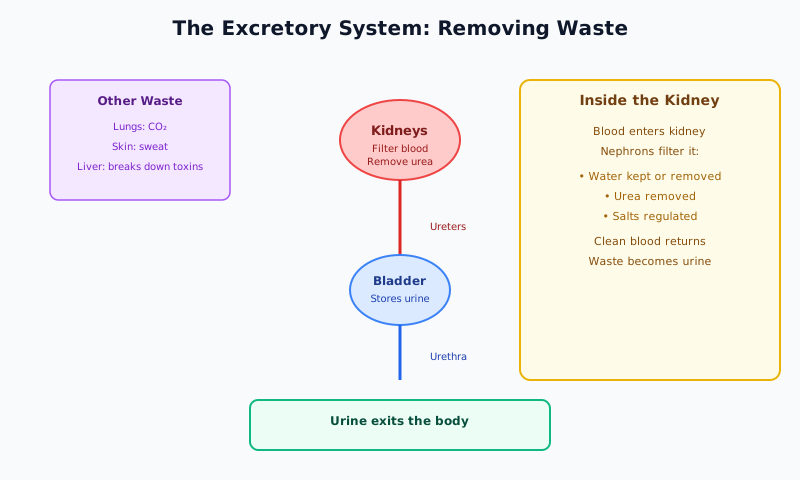
Excretory System Overview
Annotated diagram of the human excretory system showing kidneys, bladder and waste removal pathways.
Today's hook told you that your kidneys filter about 180 litres of blood every single day, roughly a bathtub full, to keep your internal chemistry perfectly balanced. That remarkable figure shows just how important removing waste is to keeping a living system running.
Now that you've worked through the lesson, can you explain why getting materials in is not enough? Think about what would happen if the kidneys stopped working, use the idea of balanced internal conditions in your answer.
Q1. Explain why waste removal matters in living systems.
1 mark for stating wastes should not build up, 1 mark for explaining disruption to function, 1 mark for linking to system balance.Q2. Describe the role of the excretory system and compare it with one system that helps bring useful materials in.
1 mark for describing excretory system role, 1 mark for comparing with intake system, 1 mark for identifying difference, 1 mark for explaining why both matter.Q3. Why is it scientifically stronger to describe living systems using both inputs and outputs rather than only one of those ideas?
1 mark for recognising both inputs and outputs matter, 1 mark for explaining input-only view is incomplete, 1 mark for linking to system function, 1 mark for giving a concrete example.Model answers (click to reveal)
Model Answers
+Multiple Choice
1: B. Wastes should not build up in the body.
2: C. The excretory system helps remove certain wastes from the body.
3: A. Living systems need both inputs and outputs.
4: D. Living systems also need wastes removed to keep functioning effectively.
5: B. This is the strongest whole-system explanation of the lesson.
Short Answer 1 (3 marks)
Waste removal matters because wastes should not build up in the body. Living systems need to remove substances that are no longer useful or could interfere with normal function.
1 mark for stating wastes should not build up. 1 mark for explaining disruption to function. 1 mark for linking to system balance.
Short Answer 2 (4 marks)
The excretory system helps remove certain wastes from the body. A system that helps bring useful materials in is the digestive system, which helps make nutrients available from food. The systems differ because one is mainly linked to input and the other to output.
1 mark for describing excretory system role. 1 mark for comparing with intake system. 1 mark for identifying difference. 1 mark for explaining why both matter.
Short Answer 3 (4 marks)
It is stronger because living systems do both things. They take in useful materials and also remove wastes. Using only one idea ignores part of how the whole system keeps functioning effectively.
1 mark for recognising both inputs and outputs matter. 1 mark for explaining input-only view is incomplete. 1 mark for linking to system function. 1 mark for giving a concrete example.
Revisit Your Thinking
Return to the opening prompt. Can you now explain why useful inputs alone are not enough for a living system to keep functioning?
Model answers (click to reveal)
Model Answers
+Multiple Choice
1: B. Wastes should not build up in the body.
2: C. The excretory system helps remove certain wastes from the body.
3: A. Living systems need both inputs and outputs.
4: D. Living systems also need wastes removed to keep functioning effectively.
5: B. This is the strongest whole-system explanation of the lesson.
Short Answer 1 (3 marks)
Waste removal matters because wastes should not build up in the body. Living systems need to remove substances that are no longer useful or could interfere with normal function.
1 mark for stating wastes should not build up. 1 mark for explaining disruption to function. 1 mark for linking to system balance.
Short Answer 2 (4 marks)
The excretory system helps remove certain wastes from the body. A system that helps bring useful materials in is the digestive system, which helps make nutrients available from food. The systems differ because one is mainly linked to input and the other to output.
1 mark for describing excretory system role. 1 mark for comparing with intake system. 1 mark for identifying difference. 1 mark for explaining why both matter.
Short Answer 3 (4 marks)
It is stronger because living systems do both things. They take in useful materials and also remove wastes. Using only one idea ignores part of how the whole system keeps functioning effectively.
1 mark for recognising both inputs and outputs matter. 1 mark for explaining input-only view is incomplete. 1 mark for linking to system function. 1 mark for giving a concrete example.
● Waste Removal
Waste removal matters because wastes should not build up in the body.
● Excretory Role
The excretory system helps remove certain wastes from the body.
● Inputs and Outputs
Living systems need both useful inputs and effective outputs.
● Bridge Forward
Next lesson shifts back to plants and the key inputs they need to survive and grow.