Plants Need Inputs Too - Water, Minerals and Light
In 2018, CSIRO plant scientists grew a wheat crop with zero mineral fertiliser and watched its yield drop by 60% within just one growing season.
Printable Worksheets
Print or save as PDF, or build a custom worksheet from any module's questions.
Q1 · If plants do not eat food the way animals do, what do they still need to take in from their environment?
Q3 · What do you think would happen to a plant if its roots were damaged or removed?
● Know
- plants need water, minerals and light
- roots are linked to water and mineral intake
- leaves are linked to light access and gas exchange
● Understand
- plants rely on environmental inputs just as animals do, though the inputs are different
- plant structures support intake and exchange
- inputs are part of plant survival and growth
● Can do
- identify key plant inputs
- connect roots and leaves to intake and exchange roles
- explain why plants should be described using system language too
Plants do not take in the same inputs as animals, but they still depend on useful materials and environmental conditions to survive and grow.
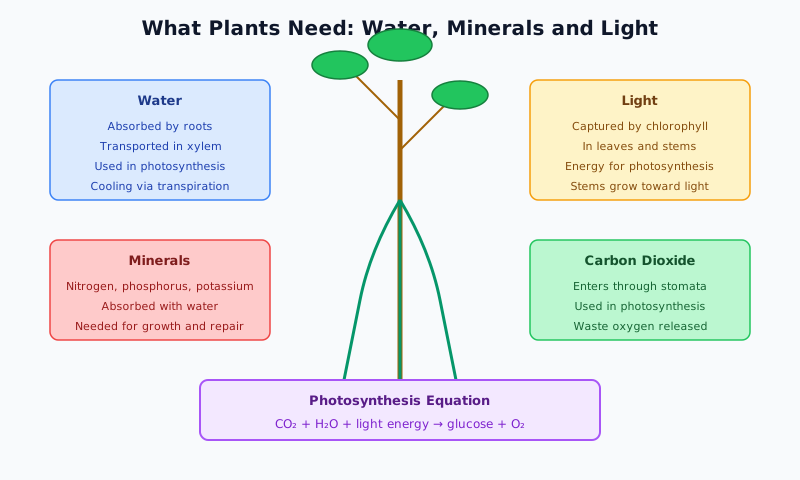
The key inputs in this lesson are water, minerals and light. These are not random facts to memorise. They are part of how plant living systems function. If a plant cannot access these inputs, its ability to survive and grow is affected.
Water
- taken in from the environment
- linked to root function
Minerals
- useful substances from the environment
- also linked to root intake
Light
- important environmental input
- linked to leaf role and exposure
Write one paragraph explaining what inputs plants need and how roots and leaves are linked to those inputs.
Put these stages of plant input acquisition in the correct order.
- Water and minerals move through the plant
- The plant uses these inputs to support survival and growth
- Leaves capture light and exchange gases
- Roots take in water and minerals from the environment
Roots are linked to taking in water and minerals. Leaves are linked to light access and gas exchange with the environment. This means plant structures can be explained in the same structure-function way used throughout the unit.
- Roots
- Leaves
- Water and minerals
- Linked to light access and gas exchange
- Key inputs taken up through roots
- Support intake of water and minerals
Animals take in useful materials such as nutrients from food, gases and water. Plants also need useful inputs, but the exact inputs and structures are different. This matters because it stops you from thinking that only animals can be described as active living systems. Plants also rely on organised intake and exchange.
A student writes: “Plants only need sunlight.” Rewrite this into a stronger scientific explanation.
Claim-Evidence-Reasoning Frame
Claim: State your position.
Evidence: Use facts from the lesson.
Reasoning: Explain how the evidence supports your claim.
Step through photosynthesis in the interactive. What are the inputs and outputs of the light-dependent stage?
Wrong: You often think plants only need sunlight to survive.
Right: Plants need water, minerals and light; removing any one input affects survival and growth.
Wrong: You think roots are only for holding plants in the ground.
Right: Roots are linked to taking in water and minerals, not just anchoring the plant.
Wrong: Leaves are mostly for decoration or shade; the important work happens in the stem and roots.
Right: Leaves are linked to light access and gas exchange with the environment.
Root and Leaf Structures
Cross-section diagram comparing root hair cells and leaf surface for intake and exchange.
Today's hook told you that a plant can build an entire trunk from almost nothing, pulling carbon out of thin air and water up from the soil, then using sunlight to glue them together. That image captures the three key inputs plants absolutely need.
Now that you've worked through the lesson, name those three inputs and explain what happens when even one is taken away. How does this compare to what you thought plants needed before you started today?
Q1. Name the key inputs plants need in this lesson and explain why they matter.
1 mark for naming water, minerals and light, 1 mark for explaining why they matter, 1 mark for linking to survival and growth.Q2. Describe how roots and leaves are linked to plant inputs and exchange.
1 mark for describing root role, 1 mark for describing leaf role, 1 mark for explaining how they connect, 1 mark for linking to plant inputs.Q3. Why is it scientifically stronger to describe plants using input and structure-function language rather than just saying “plants need sunlight”?
1 mark for recognising "plants need sunlight" is incomplete, 1 mark for mentioning water and minerals, 1 mark for linking to structures, 1 mark for explaining the systems view.Model answers (click to reveal)
Model Answers
+Multiple Choice
1: D. The key inputs here are water, minerals and light.
2: A. Roots are linked to taking in water and minerals.
3: C. Leaves are linked to light access and gas exchange.
4: B. Plants also need water and minerals, not only sunlight.
5: D. This is the strongest whole-systems explanation.
Short Answer 1 (3 marks)
Plants need water, minerals and light. These inputs matter because they support plant survival and growth as part of the living system.
1 mark for naming water, minerals and light. 1 mark for explaining why they matter. 1 mark for linking to survival and growth.
Short Answer 2 (4 marks)
Roots are linked to taking in water and minerals from the environment. Leaves are linked to light access and gas exchange with the environment. Together these structures help the plant obtain important inputs and exchanges it needs.
1 mark for describing root role. 1 mark for describing leaf role. 1 mark for explaining how they connect. 1 mark for linking to plant inputs.
Short Answer 3 (4 marks)
It is stronger because it explains more than one input and links those inputs to plant structures. Just saying “plants need sunlight” ignores water, minerals, roots and the wider structure-function explanation of how the plant works as a system.
1 mark for recognising "plants need sunlight" is incomplete. 1 mark for mentioning water and minerals. 1 mark for linking to structures. 1 mark for explaining the systems view.
Revisit Your Thinking
Return to the opening prompt. Can you now explain plant inputs with clearer structure-function language?
Model answers (click to reveal)
Model Answers
+Multiple Choice
1: D. The key inputs here are water, minerals and light.
2: A. Roots are linked to taking in water and minerals.
3: C. Leaves are linked to light access and gas exchange.
4: B. Plants also need water and minerals, not only sunlight.
5: D. This is the strongest whole-systems explanation.
Short Answer 1 (3 marks)
Plants need water, minerals and light. These inputs matter because they support plant survival and growth as part of the living system.
1 mark for naming water, minerals and light. 1 mark for explaining why they matter. 1 mark for linking to survival and growth.
Short Answer 2 (4 marks)
Roots are linked to taking in water and minerals from the environment. Leaves are linked to light access and gas exchange with the environment. Together these structures help the plant obtain important inputs and exchanges it needs.
1 mark for describing root role. 1 mark for describing leaf role. 1 mark for explaining how they connect. 1 mark for linking to plant inputs.
Short Answer 3 (4 marks)
It is stronger because it explains more than one input and links those inputs to plant structures. Just saying “plants need sunlight” ignores water, minerals, roots and the wider structure-function explanation of how the plant works as a system.
1 mark for recognising "plants need sunlight" is incomplete. 1 mark for mentioning water and minerals. 1 mark for linking to structures. 1 mark for explaining the systems view.
● Key Inputs
Plants need water, minerals and light to survive and grow.
● Roots
Roots are linked to taking in water and minerals.
● Leaves
Leaves are linked to light access and gas exchange with the environment.
● Bridge Forward
Next lesson compares plant and animal living systems directly.